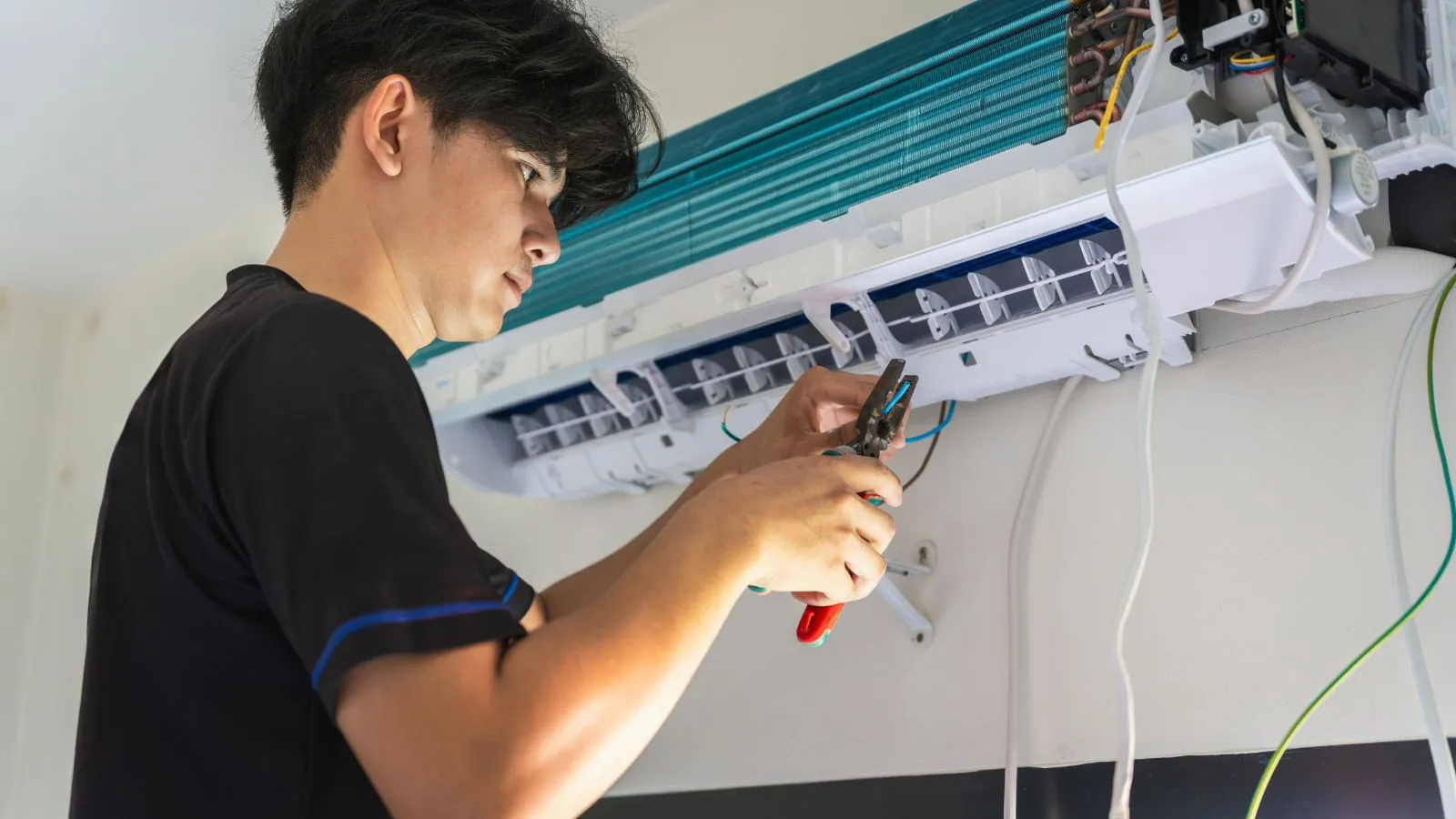
AC leak water damage repair in Taylor, MI deals with a source that is easy to miss. An air conditioner pulls moisture out of the air as it cools, and that condensate drains away through a line to a floor drain, a pump or the outdoors.
When the line clogs or the drain pan rusts through, the water goes into the ceiling, the closet or the floor around the air handler. Turn off the system at the thermostat and call the 24/7 dispatch line.
A dripping air conditioner is not always an emergency, but a running leak that wets drywall or insulation is. The page treats it as a standard dry-out. Evening and weekend calls are welcome, and a crew goes out the same day when one is available. Active ceiling damage belongs on the ceiling page.
What makes an AC leak
- A clogged condensate drain line, usually from algae or sludge.
- A rusted or cracked drain pan under the indoor coil.
- A frozen evaporator coil that melts and overflows the pan.
- A disconnected or poorly sloped drain line.
- A failed condensate pump on units installed below the drain level.
A frozen coil is often caused by low airflow from a dirty filter or by low refrigerant. A licensed HVAC technician diagnoses and fixes those. The restoration crew handles the water and the damage it left.
Signs of a hidden leak
The most common sign is a stain on the ceiling below an attic air handler. Others include a musty smell near the unit, water in the pan, rust on the base, peeling paint on the closet wall and a damp section of carpet beside the furnace closet. Because the air handler may be in a closet, attic or basement, the damage can spread before you notice it.
| Air handler location | Where the water goes |
|---|---|
| Attic | Insulation and the ceiling below, see the ceiling page |
| Closet on main floor | Closet walls, baseboards and adjoining flooring |
| Basement | Floor, finished walls and stored items |
| Crawl space | Insulation and joists, see the crawl space page |
| Rooftop unit on a commercial roof | Roof membrane and tenant ceilings |
How the restoration is done
The crew finds the wet area with a moisture meter and thermal camera. Wet attic insulation is removed, because it holds water against the framing, and soaked ceiling drywall is cut out. Air movers and dehumidifiers dry the structure, as described on the structural drying page. A crawl space unit is handled under crawl space water damage.
Because AC leaks are slow, the materials tend to be damp rather than soaked, which makes mold more of a concern. Mold is not covered with a health claim here, but moisture is what mold needs, so drying to the standard matters. If you see visible growth, ask a qualified professional about testing and remediation under the ANSI/IICRC S520 standard.
AC leak cost factors
Price follows the wet area, the materials involved, the access to the unit, the drying days and the rebuild. A small closet leak is a small job. A leak that ran through an attic into several rooms is not. Scope and price are explained before work starts.
Michigan regulators say sudden and accidental water damage is often covered by a homeowners policy, while slow leaks and maintenance issues are often excluded. A clogged drain that built up over a season may fall into the second group. Ask your insurer. Crews also serve Riverview and Southgate homes.
A quick seasonal habit helps. At the start of each cooling season, pour a cup of water into the drain pan and watch it leave. If it backs up or lingers, call your HVAC company before the first hot week, not after the first wet ceiling.
Questions people ask
Can I keep running the AC if it is leaking?
Turn it off at the thermostat until the leak is stopped. A running unit keeps making condensate and can freeze the coil. Call a licensed HVAC technician for the fix.
How do I find the condensate drain line?
It is a small pipe, usually white PVC, leaving the indoor unit and running to a drain or outside. If you cannot find it, an HVAC technician can.
Does insurance cover AC leak water damage?
Sometimes, if the leak was sudden. Many policies exclude slow, repeated leaks. Check your policy and ask your insurer.
Can mold start from an AC leak?
Moisture is what mold needs, so a damp attic or closet can support it. Drying promptly to the dry standard limits the chance. Ask a qualified professional about testing if you see growth.
Do you also fix the AC?
No. An HVAC technician handles the equipment. We dry and repair the structure.