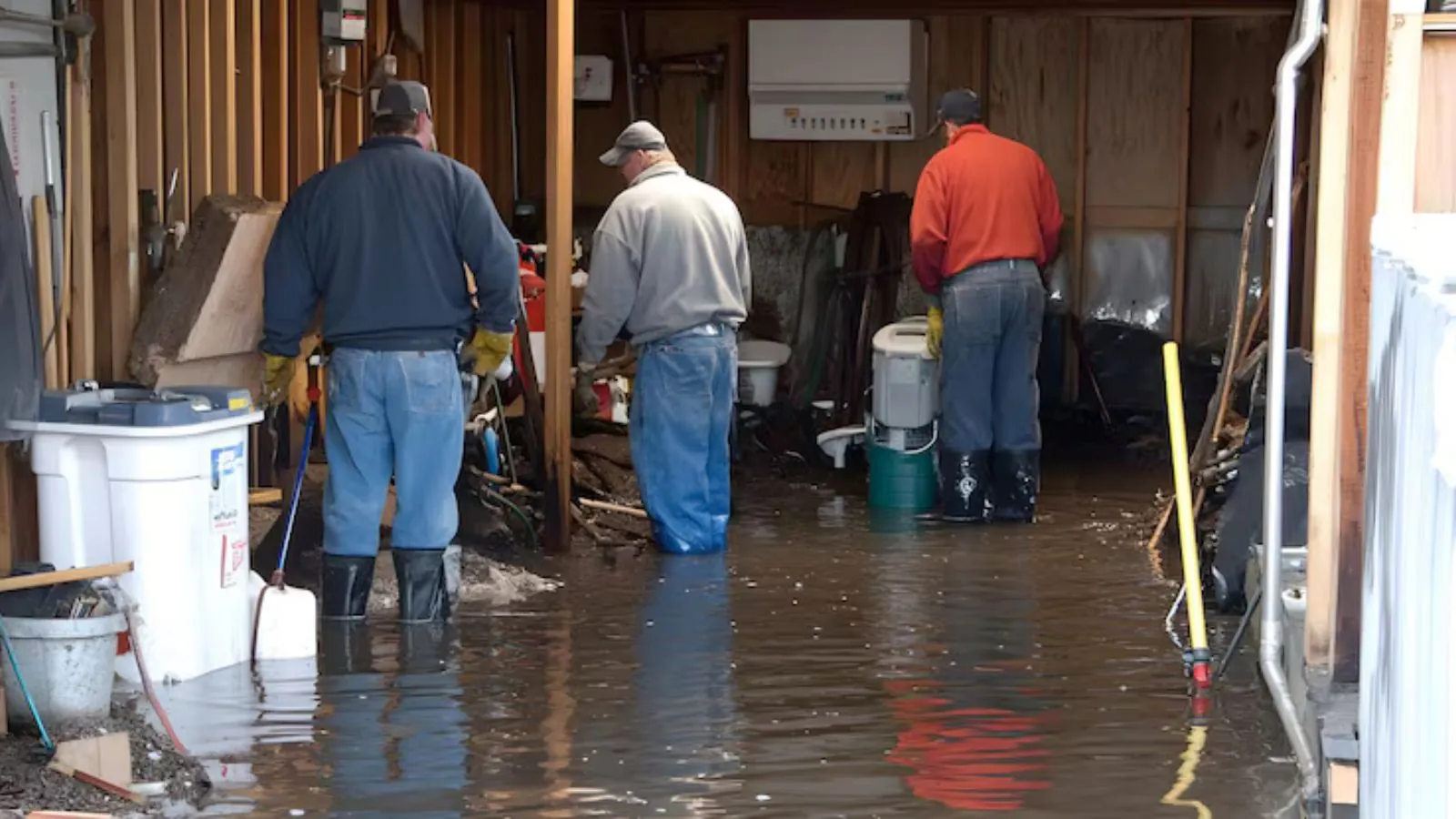
Water extraction in Taylor, MI means getting standing and soaked-in water out of the building with the right machine for the depth. It is an emergency job because every hour of delay pushes more water into carpet pad, baseboards and subfloor seams.
The dispatch line is open 24/7, and the first thing you can do while you wait is stop the source, usually the main water shutoff, and keep power off to anything touching the water.
This page is about the removal step only. What happens after the water is gone, the drying, is on the structural drying page, and what happens when the water carried contamination is on the sewage backup page. Keeping those apart matters, because extraction finishes in hours and drying takes days.
When standing water is an emergency
Any water deeper than a puddle, any water that has reached a wall or an outlet and any water that came from a source you cannot stop counts as urgent. Night and weekend calls are routine here. Same-day response is offered when crews are available, and an after-hours call is not billed as a different kind of job in the scope you are given.
Which machine for which depth
Depth sets the equipment. A few inches in a basement need a submersible pump to take the bulk of the water, followed by wet vacuums to get the last of it off the slab. A soaked carpeted room needs a weighted extraction wand that pulls water out of the pad, which a shop vacuum cannot do. Large commercial floors use truck-mounted extraction with long hose runs from the vehicle.
| Situation | Tool | What it removes |
|---|---|---|
| Inches of standing water | Submersible pump | The bulk volume, fast |
| Wet slab or tile | Wet vacuum | Remaining film and puddles |
| Soaked carpet and pad | Weighted extraction wand | Water held inside the fibers and pad |
| Large floor area | Truck-mounted extraction | High volume with long hose runs |
| Water under flooring | Injection drying panels | Moisture trapped beneath the surface |
What to do before the crew arrives
- Shut off the main water valve if a supply line is the source.
- Turn off power to the wet area only if you can reach the panel while dry.
- Photograph and video the damage before moving anything.
- Move rugs, small furniture and electronics out of the water.
- Keep children and pets out, and stay out of dirty water.
If the water is dirty, stop there. Outside water and drain water carry contamination, and a crew in protective gear should handle it. If a washing machine hose or ice maker line caused the loss, the appliance leak page covers the source side.
Renters, landlords and shared buildings
The Census Bureau counts about a third of Taylor homes as renter-occupied, since 66.7 percent are owner-occupied. If you rent, tell your landlord or property manager right away, because the building owner often controls the plumbing, the shutoff and the insurance claim. Ask who is authorized to approve work before a crew starts, and keep your own photos of belongings, which a renter's policy may cover separately from the building.
Extraction cost factors
Price follows the volume and the access. Water depth, the area covered, how many floors the water crossed, whether the water is clean or contaminated and how long equipment has to run all change the scope. Scope and price are explained before work starts, so the number you hear on the phone is not rewritten after the truck arrives.
Michigan regulators say sudden and accidental water damage is often covered by a homeowners policy, while flood damage generally needs separate flood coverage. Photograph before you extract, keep a record of what was removed and ask your insurer what applies. A thorough extraction record helps whichever way the claim goes. Crews also serve Southgate and Garden City when a Downriver call comes in.
Questions people ask
Do you handle water extraction emergencies at night or on weekends in Taylor?
Yes. The line is answered around the clock. Extraction is time-sensitive, so a night call is dispatched like a daytime one, with same-day response when crews are available.
Can I use a shop vacuum on a flooded room?
A shop vacuum handles a small spill on a hard floor. It cannot pull water out of carpet pad, and it is not safe for dirty water. For anything bigger, call.
How long does extraction take?
Removing standing water often takes a few hours, depending on depth and area. Drying afterward is a separate stage that commonly runs several days.
Is extracted water always cleaned up the same way?
No. Clean supply water can often be dried in place, while water from outside or from a drain is contaminated and needs removal of porous materials.
What if the water came from the neighbor above me?
Call us for the extraction and tell the building owner or manager at once. Document everything, since responsibility and coverage can be sorted out afterward.