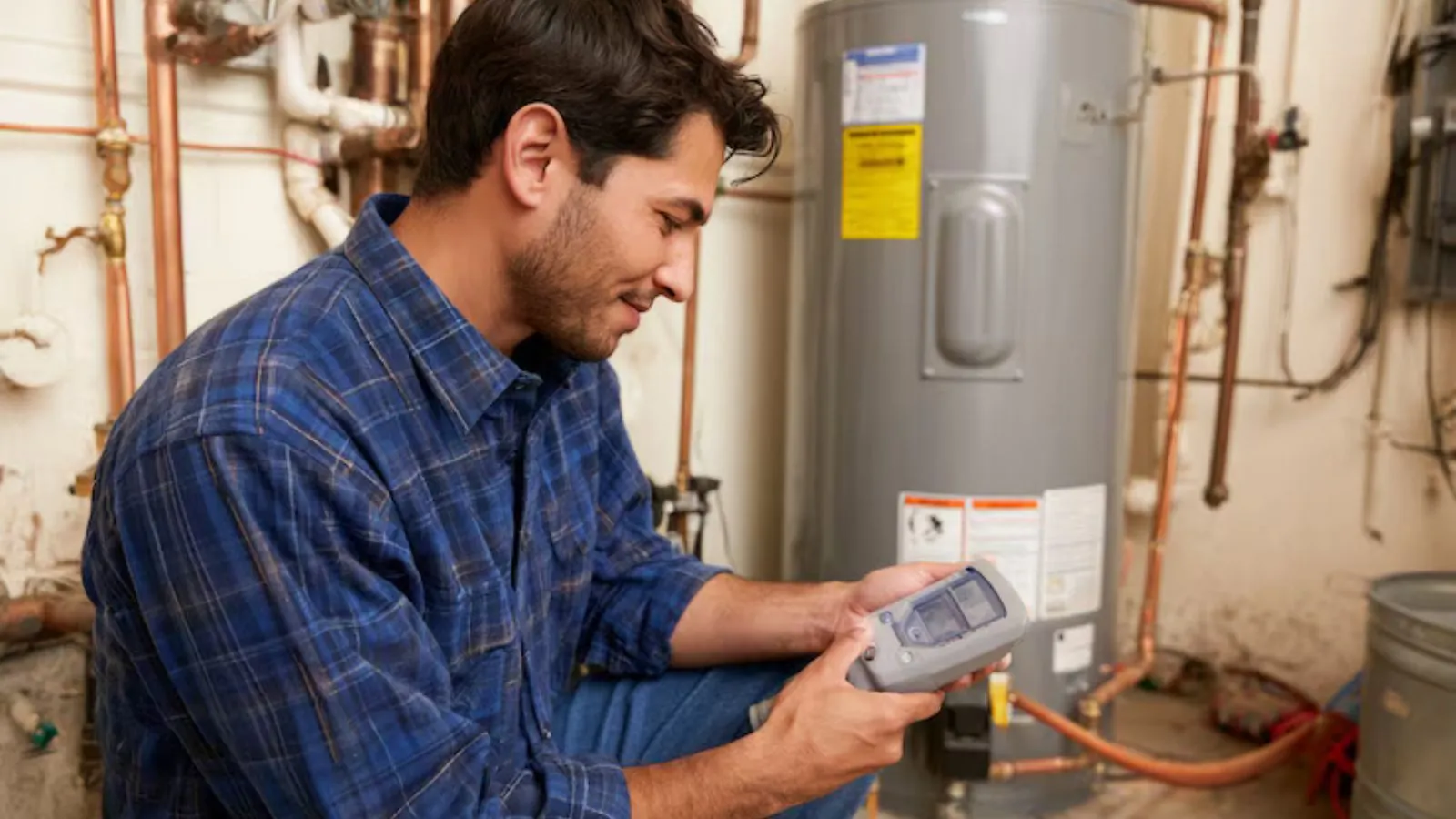
Water heater leak cleanup in Taylor, MI is urgent because a tank holds typically 40 to 50 gallons, and a failed one can release most of it in minutes, then keep leaking from the supply line.
Turn off the electric breaker or set the gas valve to off, close the cold water valve on top of the heater, and call the 24/7 dispatch line. Do not touch the heater if water is touching the electrical connections.
This page is about the heater as the source. A line that burst somewhere else is on the burst pipe page, and leaks from a washer or dishwasher are on the appliance leak page. Because most water heaters sit in basements or utility rooms, the water usually runs to a floor drain, a slab or finished flooring.
When a water heater leak is an emergency
Treat any pooling at the base, any hissing from the tank or any ceiling or floor stain below the heater as urgent. A small drip at a fitting is less pressing than water running from the tank wall, but both need a plumber. After-hours calls are common, since tanks often fail overnight, and same-day response is offered when crews are available.
- Shut off the heater at the breaker or gas control, never by reaching into water.
- Close the cold water supply valve above the tank.
- Do not drain a hot tank without cooling it, since the water can scald.
- Photograph the label, the leak and the surrounding damage.
- Call a licensed plumber to replace the heater and call us to dry the space.
Slow leaks and fast failures
Some heaters fail all at once, and some leak slowly for months. A slow leak rots the floor under the tank, stains the surrounding drywall and sometimes feeds hidden mold in a closet or cabinet. Corrosion inside the tank is the usual cause of tank-wall leaks, while loose fittings, the temperature and pressure relief valve and the drain valve are the usual culprits for smaller leaks.
A sediment buildup at the bottom of the tank can shorten the life of the heater. Ask your plumber about flushing the tank and about the age shown on the label. If the heater is near the end of its life, replacing it before it fails costs less than cleaning up after.
What the cleanup involves
| Stage | What happens |
|---|---|
| Extraction | Pumps and wet vacuums remove standing water from the utility space |
| Assessment | Moisture mapping into walls, flooring and adjoining rooms |
| Removal | Wet drywall, baseboard and soaked storage items are removed |
| Drying | Air movers and dehumidifiers run until readings reach the dry standard |
| Repair | Drywall, flooring and paint are replaced as needed |
Basement installations get a longer drying plan, because concrete holds moisture and finished walls sit against it. See basement water damage cleanup for the below-grade side, and the structural drying page for how equipment is set and checked daily.
Water heater leak cost factors
The price follows the amount of water released, the rooms it reached, the flooring and wall materials, the drying days and the rebuild. If the heater sat in a finished space, expect more materials involved. Scope and price are explained before work starts.
Michigan regulators say sudden and accidental water damage is often covered by a homeowners policy, while damage from long-term leaking or poor maintenance is often excluded. A tank that fails without warning is the sudden kind, but your policy governs. The cost of the heater itself is usually a separate question from the damage it caused. Crews serve 48180 and nearby Southgate and Riverview.
Questions people ask
Do you handle water heater leak emergencies at night or on weekends in Taylor?
Yes. The dispatch line is open around the clock. Tank failures often happen overnight, and same-day response is offered when crews are available.
Should I turn off the heater before calling?
Yes, if you can do it safely. Turn off the breaker or set the gas valve off, close the cold supply and then call. Never reach into standing water to do it.
Is a leaking water heater a plumber or a restoration job?
Both. The plumber replaces or repairs the heater. The restoration crew removes the water and dries the space. Many homeowners call both the same day.
How much water can a heater release?
Typical tanks hold 40 to 50 gallons, plus whatever the supply line adds while it keeps running. Close the cold valve to stop the supply.
Can mold grow from a slow heater leak?
It can if the area stays damp. A slow leak behind a closet wall is one of the ways mold starts. Dry the area and fix the source.