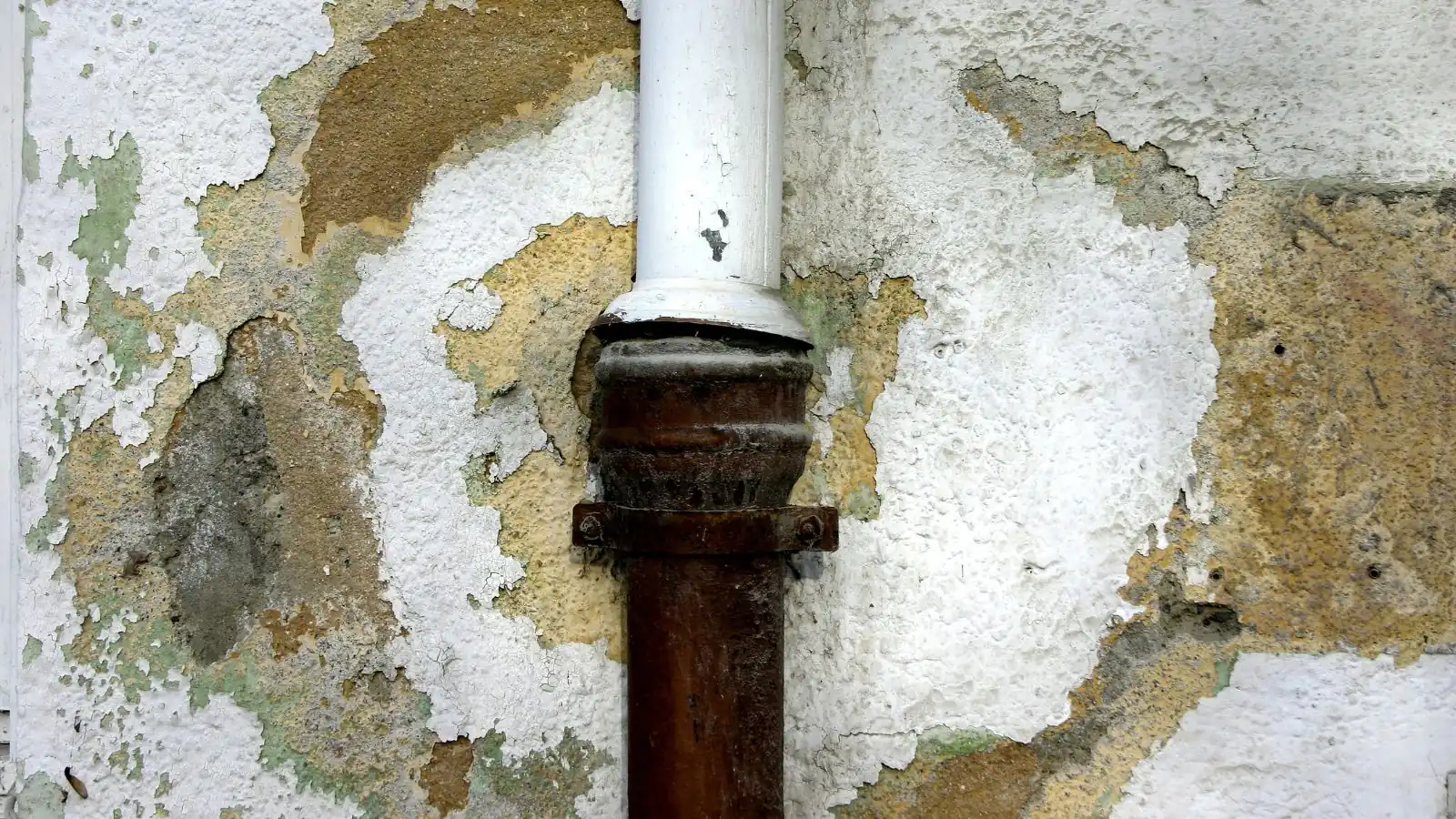
Wall and drywall water damage repair in Taylor, MI deals with the gypsum board, baseboards, insulation and paint that make up the walls of your home. Drywall is a paper-faced plaster that soaks up water like a wick, carrying it several inches above the visible line. A wall that looks only stained can be wet well above it, which is why a moisture meter, not your eyes, sets the scope.
This page owns walls and drywall. Ceilings are on the ceiling page, flooring is on the hardwood and carpet pages, and a wet kitchen wall is on the kitchen page. The questions here are what the wall is made of and what the water did to it.
Baseboards and the wicking line
Water on a floor climbs into the bottom of the wall. Baseboards soak it up, drywall wicks it above, and insulation inside holds it. By the time you see a stain, the wet area can extend a foot or more higher. The crew checks readings up the wall until they reach dry material, which is the edge of the damage and the line of any cut.
| Sign on the wall | What may be behind it |
|---|---|
| Baseboards swelling or lifting | Water wicking from the floor |
| Paint blistering or peeling | Moisture pushing the paint off the wall |
| Soft or crumbling drywall | Saturated gypsum that has lost strength |
| Stains that keep returning | A hidden leak or recurring moisture |
| Musty smell near the wall | Wet insulation or damp cavity |
Moisture behind the paint
Blisters or peeling on a wall mean moisture got behind the paint film, whether from a pipe, condensation or a roof or window leak. Painting over it without drying the wall and fixing the cause repeats the problem a season later. A moisture reading shows whether the wall is wet now or the blisters are left over from an old event.
How the repair works
- Map the moisture with a meter and a thermal camera.
- Remove baseboards and cut the drywall above the wet line, usually in a straight line for easy repair.
- Pull wet insulation, which holds water against the framing.
- Dry the cavity and framing with air movers and dehumidifiers, as covered on the structural drying page.
- Hang new drywall, tape, finish, prime and paint to match.
Sometimes drywall can be dried in place. The EPA's water damage guidance says wallboard can be dried in place if it shows no obvious swelling and its seams are intact, and otherwise should be removed and replaced. That is the right test, and the crew applies it with readings. If the water was contaminated, the drywall is removed no matter how it looks, as covered on the sewage backup page.
Older homes and what is in the wall
Walls in older houses may contain plaster, old paint or insulation types that call for care when cut. Do not disturb suspect materials yourself, and ask a qualified professional about testing before demolition if your home is older. This is general caution, not a claim about any one home. If a wall opening is needed, the crew explains it before work starts.
Wall repair cost factors
Price follows how much wall is cut, the wall type, whether insulation is replaced, the drying days and the finish work. Matching texture and paint on a large wall can cost more than the drywall itself. Scope and price are explained before work starts.
For a claim, photograph the wall before and after it is opened, record the moisture readings and keep a sample of the baseboard or trim. The state regulator advises telling your insurer you have water damage and asking what applies. Sudden and accidental damage is often covered, and a recurring stain from an unrepaired leak often is not. Crews serve 48180, Garden City and Dearborn.
Questions people ask
Can wet drywall be dried instead of replaced?
Sometimes. If it is not swollen, its seams are intact and the water was clean, drywall can be dried in place. Otherwise it is cut out and replaced.
How high does water climb in a wall?
Drywall wicks water upward, often well above the visible line. Moisture readings find the actual edge.
Why does my wall paint keep peeling?
Moisture is getting behind the paint. Find and fix the source, dry the wall, then repaint.
Do you handle wet wall emergencies at night?
Calls are taken at any hour. If water is running inside the wall, shut off the main first, then call, and a crew is sent the same day when one is available.
Do I have to replace the whole wall?
Usually not. Cuts follow the wet line, and a straight cut makes the repair clean.