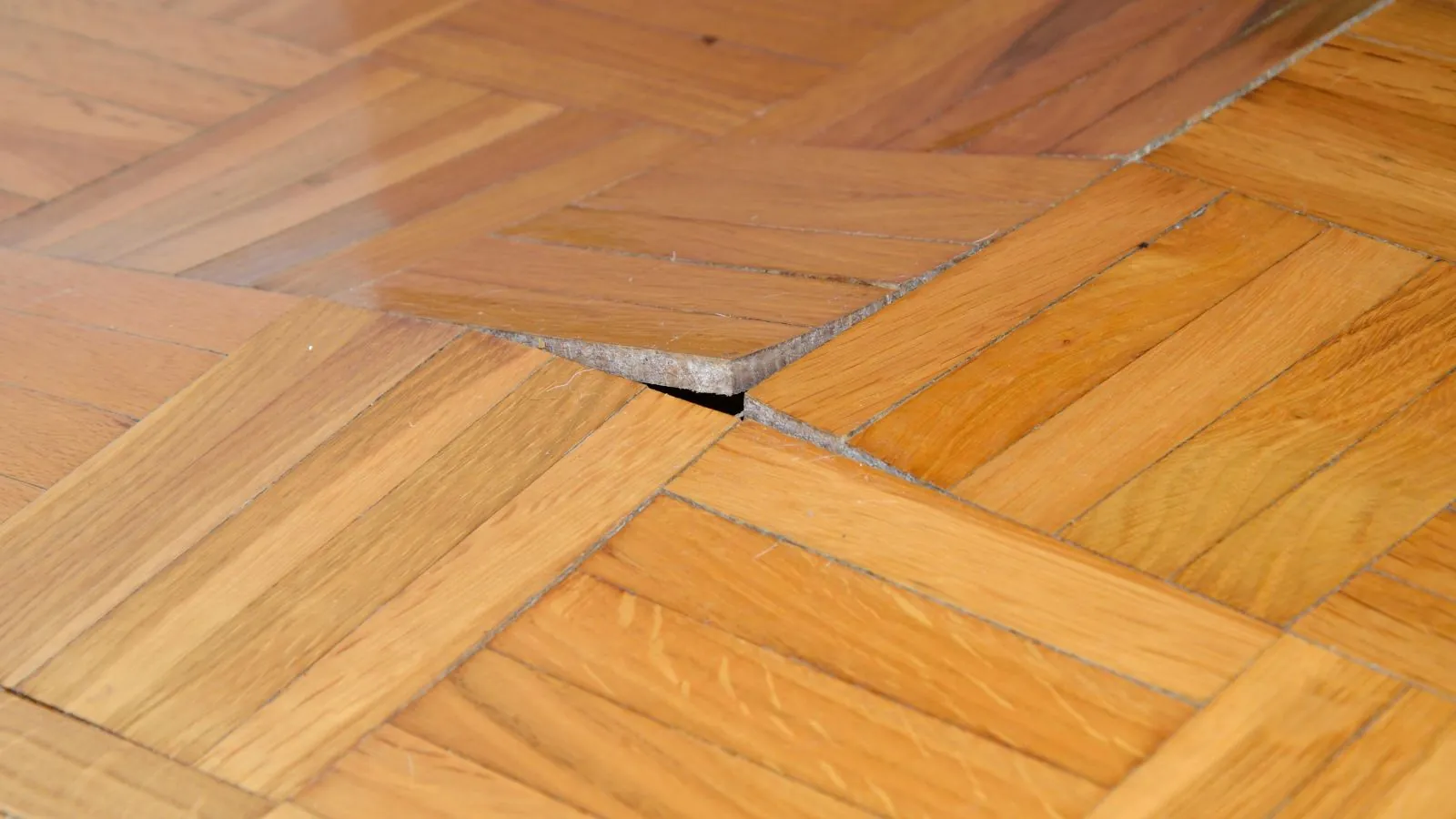
Hardwood floor water damage repair in Taylor, MI is a race between water and time. Wood is a natural material that absorbs moisture and swells, and it does so unevenly, so boards cup at the edges, crown in the middle or buckle off the subfloor. Laminate and engineered wood behave differently but the same pattern applies. Stop the source, wipe the surface, and call the 24/7 dispatch line before heat or time makes it worse.
This page owns wood and laminate flooring. Carpet and pad are on the carpet page, and the wall that meets the floor is on the wall and drywall page. Hardwood is often installed over a subfloor, and sometimes over a slab, so the floor you see is only half the problem.
Cupping, crowning and buckling
| What you see | What it means | What often follows |
|---|---|---|
| Cupping: edges higher than the center | The bottom of the board is wetter than the top | May flatten as it dries, then be sanded |
| Crowning: center higher than the edges | The top is wetter, or the board was sanded while wet | Monitor, then sand when dry |
| Buckling: boards lifting off the subfloor | Heavy water saturation and expansion | Often requires replacement |
| Gapping after drying | Boards shrank back | Fill, refinish or replace |
| Black stains or dark spots | Water lingered, or finish was breached | Sand or replace affected boards |
Cupping is common after a leak, and it does not always mean replacement. If the cause is stopped and the floor is dried slowly and evenly, it may flatten and be sanded and refinished. Rushing the dry with high heat can crack or split boards, so the crew controls the process.
Drying wood floors the right way
Surface wiping is not enough. Water goes under the boards, into the tongue-and-groove joints and into the subfloor. The crew checks the moisture content of the boards and the subfloor with a meter and compares the readings to a dry reference. Drying uses air movers, dehumidifiers and sometimes injection panels that push dry air under the floor through small holes or by lifting a few boards.
- Remove rugs, mats and furniture that trap water on the floor.
- Do not use a heater, a hair dryer or a steam cleaner on wet boards.
- Photograph the damage and note which rooms and boards are affected.
- Keep air moving in the room only if a crew advises it.
- Do not sand or refinish until the moisture readings are at target.
Wood over a concrete slab needs particular care, because the slab can keep releasing moisture. That is also why the slab leak page matters when a floor goes wet with no visible source. Equipment and monitoring follow the process described on the structural drying page.
Saving versus replacing
Solid hardwood is more forgiving than laminate or engineered wood. A laminate floor that swelled at the edges rarely goes back to its original shape, since the core is fiberboard. Engineered wood has a plywood core and a wood veneer, and it can sometimes be saved, but the veneer can delaminate. A crew will say honestly where replacement is the better choice, since a floor saved and refinished that later fails is a worse result.
Matching is the other question. If part of a floor is replaced, the new boards may not match the old color, so refinishing the whole room can be the better approach. Ask for the options in the written scope.
Hardwood floor cost factors
Price follows the area of flooring affected, the wood type, whether the subfloor is wet, the drying days and whether the floor is refinished or replaced. A whole-room refinish costs more than a patch, and a matching problem can drive the choice. Scope and price are explained before work starts.
For your claim, the state insurance regulator's advice is to tell your insurer you have water damage, take photos or video and keep damaged items until the insurer says they can go. Sudden and accidental leaks are often covered, and gradual damage often is not. Crews serve 48180, Garden City and Dearborn homes.
Questions people ask
Can a cupped hardwood floor be saved?
Often, yes. If the water is stopped and the floor is dried slowly and evenly, cupping may flatten and the floor can be sanded and refinished. Buckled boards are less likely to be saved.
How long should I wait before sanding?
Until moisture readings in the boards and subfloor reach the dry standard. Sanding too early can lock in problems.
Can a heater or fan dry the floor?
Heat can crack or split boards. Fans alone rarely reach water under the floor. Controlled equipment and readings are safer.
Does laminate flooring recover from water?
Rarely. The fiberboard core swells and does not return to shape, so laminate that was soaked is usually replaced.
Do you handle hardwood water emergencies at night?
Yes, calls are taken through the night. Starting the dry-out early gives wood the best chance, and a crew goes out the same day when one is available.