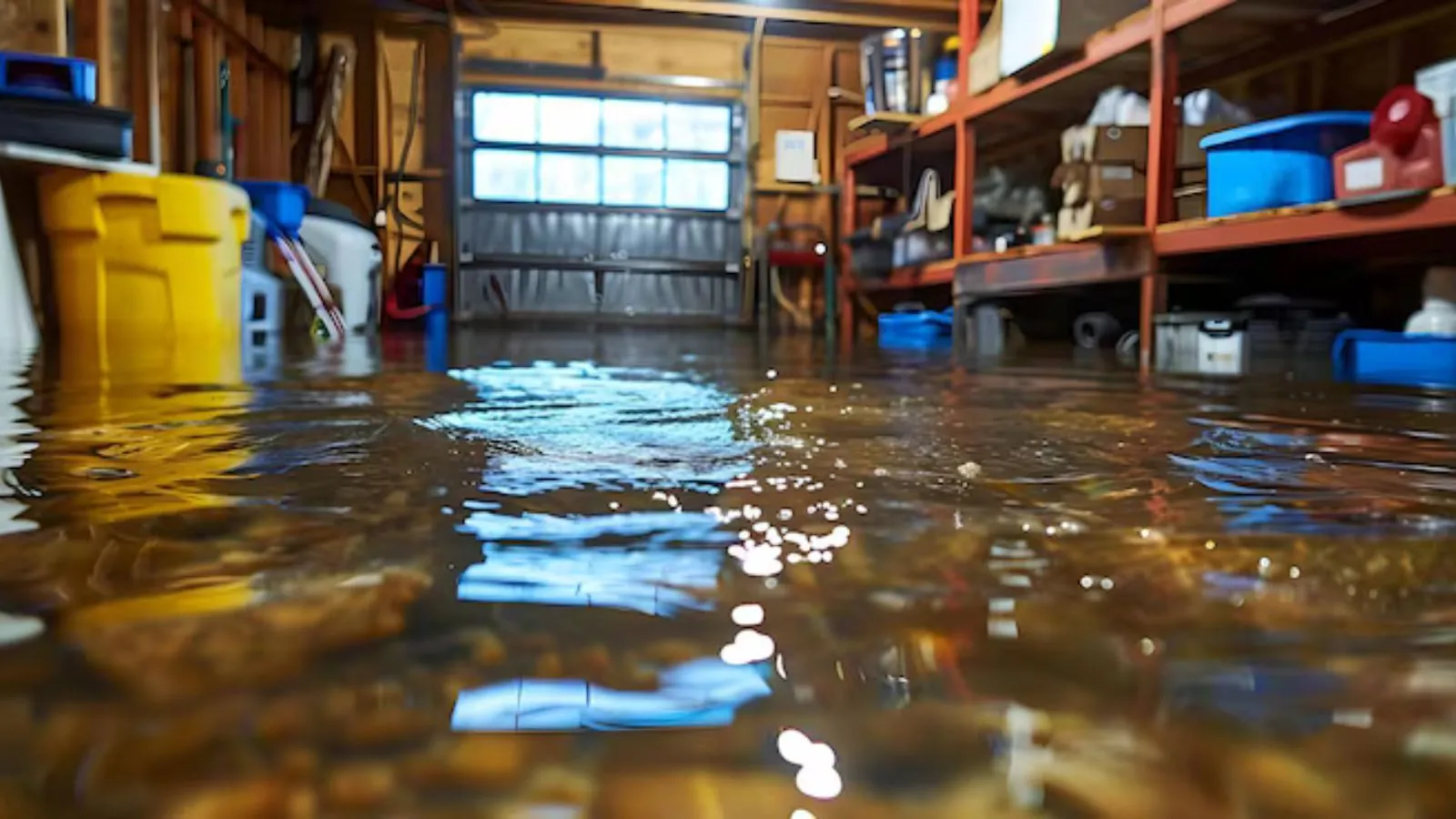
Flood damage cleanup in Taylor, MI starts with an honest question: where did the water come from? Rain that overwhelmed a storm drain, groundwater pushing through a basement wall and a creek that left its banks all carry silt, bacteria and chemicals, and that changes the job.
This is an emergency, and our dispatch line is open 24/7 for it. While you wait for a crew, stay out of standing water if any outlet, cord or panel is wet, and call the utility or 911 about any electrical or gas risk before you call us.
Flood water is treated as contaminated until proven otherwise. Under ANSI/IICRC S500 practice, water that comes in from outside the building falls into Category 2 or 3, so porous materials it touched, such as carpet, pad, insulation and low drywall, are usually removed rather than dried in place. That is different from a clean supply line failure, which is covered on the burst pipe page.
When flood water is an emergency
Treat it as urgent whenever water is above the floor, is still rising, or has entered a finished room. Every hour that wet drywall, pad and framing stay saturated adds to the repair list. Same-day and after-hours response is offered when crews are available, and a call at 3 a.m. is handled the same way as a call at noon.
- Do shut off the main water valve if a supply line is involved and you can reach it dry.
- Do turn off power to the wet area only if the panel is dry and you are not standing in water.
- Do lift valuables, papers and electronics onto dry surfaces and take photos before moving things.
- Do not walk through flood water in bare feet, run a household vacuum or use appliances in the wet area.
- Do not flush toilets or run drains if sewage may be backing up. That belongs on the sewage backup page.
What flooding has looked like in the Taylor area
The reference point for southeast Michigan is August 11, 2014. The National Weather Service recorded 4 to 6 inches of rain over about four hours across Wayne, southern Oakland and Macomb counties, with roughly 75,000 homes and businesses affected and more than 3,000 suffering major damage.
City sewer pumps were overwhelmed, and Ecorse Creek in Dearborn Heights reached a record stage of 10.22 feet. A May 2019 storm brought flooding to the same creek corridor, and Dearborn Heights officials said the system struggles once rainfall passes about two inches.
Taylor sits in the middle of that region, so the practical lesson is to know your own exposure.
The FEMA Flood Map Service Center shows the mapped flood zone for your address, and the city building department can tell you what local permits apply to repairs. FEMA also says you do not have to be in a mapped flood zone to have a flood, so a clear map is not a reason to skip checking your coverage.
How a flood cleanup is done
The crew starts with safety checks, then extraction. Submersible pumps move deep water, and truck-mounted or portable extraction units pull water out of carpet and low areas. Details on that stage are on the water extraction page. Next come demolition and disposal of materials that cannot be saved, usually carpet pad, wet insulation and drywall cut above the visible wicking line.
Surfaces that stay are cleaned and treated with an antimicrobial, then dried with air movers and dehumidifiers while moisture meters and thermal cameras track progress. The structural drying stage is explained in full under structural drying. Contents are moved, cleaned or discarded on the facts, not on a guess.
| What flooded | Usual outcome | Why |
|---|---|---|
| Carpet and pad | Removed and replaced | Contaminated water soaks into pad that cannot be cleaned. |
| Drywall | Cut out above the wet line | Gypsum wicks water upward and holds contamination. |
| Concrete slab | Cleaned, treated and dried | Hard, dense and able to be disinfected. |
| Framing and subfloor | Cleaned and dried to the dry standard | Dense wood can be saved when readings reach target. |
| Appliances and electronics | Evaluated by a technician before power | Water inside a unit can hide a failure. |
Flood cleanup cost factors
Flood jobs cost more than clean-water jobs for a reason. The factors that move the price are the water category, the depth and area covered, how many porous materials must come out, the number of drying days the readings require and how much rebuilding follows. Call the dispatch line and describe the loss to get your own scope and price, which are explained before work starts.
Insurance and flood water
Michigan's insurance regulator states that flood damage is not covered under a standard homeowners policy. Flood insurance may be available through the National Flood Insurance Program or a private insurer.
Sewer or water backup endorsements offer limited coverage, and a sewer backup or failing sump pump may be covered under your policy. DIFS advises telling your insurer you have water damage and asking what applies, rather than calling the event a flood. Take photos, protect the property from more loss and keep damaged items until the insurer says otherwise.
Flooded areas of the home also tend to overlap with other pages. A wet lower level is covered on the basement water damage page, and a storm that came through the roof is covered under storm water damage. Crews serve Dearborn and Taylor neighborhoods along the same creek corridor.
Questions people ask
Do you handle flood damage emergencies at night or on weekends in Taylor?
Yes. The dispatch line answers 24 hours a day, every day. Flood water gets worse by the hour, so after-hours calls get the same priority as daytime ones, with same-day response when crews are available.
Is flood water the same as water from a burst pipe?
No. Water that enters from outside is treated as contaminated, usually Category 2 or 3, so porous materials are removed. A clean supply line failure can often be dried in place if it is caught quickly.
Does homeowners insurance cover flood damage in Michigan?
A standard homeowners policy does not, according to the state insurance regulator. Separate flood coverage may be available, and sewer backup endorsements are limited. Ask your insurer what applies to your loss.
How do I find out if my address is in a flood zone?
Search your address on the FEMA Flood Map Service Center. The city building department can also answer questions about local rules for repairs after flooding.
Can I keep my carpet after a flood?
Usually not. Carpet and pad that sat in outside flood water are normally removed. Clean-water spills that are extracted within hours are the exception, and the crew checks that on site.