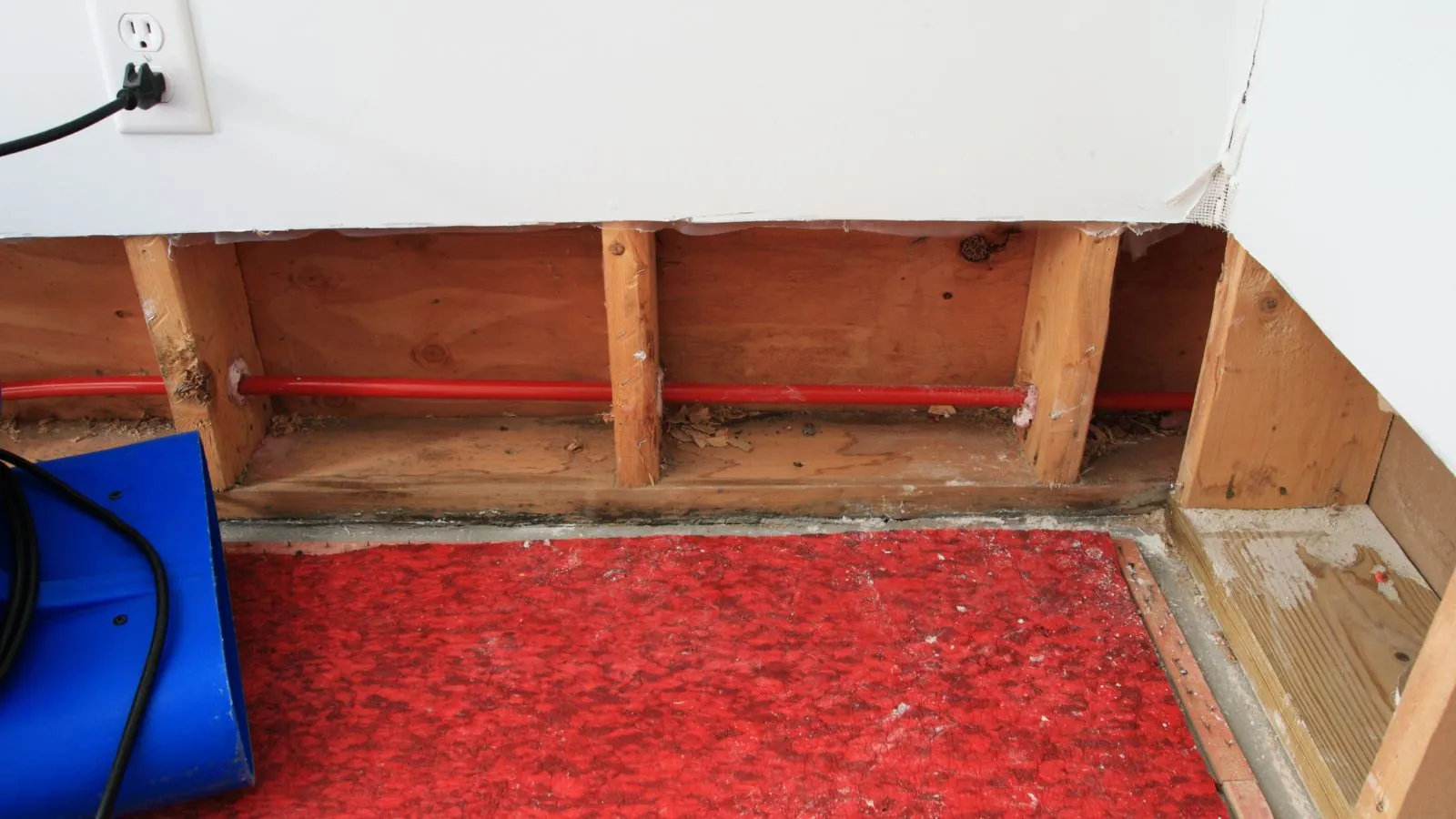
The water is gone, so why does the room still feel damp?
Standing water can be gone and the structure can still be wet. Drywall, framing, subfloor, insulation and concrete absorb water and release it slowly.
A carpet that feels dry on top can sit over a wet pad and a damp subfloor, and a wall that looks fine can be wet inside. The fix is a drying plan, which is what this page describes. In the trade it is called structural drying, and a lot of people search for it as water mitigation.
Structural drying and dehumidification in Taylor, MI follows the ANSI/IICRC S500 approach. Crews map the moisture, place equipment to move and remove it, and check readings every day until the materials reach the dry standard. You can ask any company whether its crews work to that standard. This page covers the process, and a fresh loss is on the water extraction page.
Moisture mapping
The first job is to find the wet area, and your eyes are not enough. A pin or pinless moisture meter reads the water content of drywall and wood. A thermal camera shows cool, wet areas behind surfaces. A hygrometer reads humidity and temperature in the air. These tools create a map that is photographed and recorded, and it is the baseline for the whole job.
| Tool | What it reads | Why it matters |
|---|---|---|
| Pin moisture meter | Water in wood and drywall | Confirms what is wet and how wet |
| Pinless meter | Moisture below the surface | Scans without making holes |
| Thermal camera | Temperature patterns | Finds hidden wet areas |
| Hygrometer | Humidity and air temperature | Sets the drying conditions |
| Reference readings | Dry unaffected materials | Sets the dry standard for your house |
Air movers, dehumidifiers and the balance between them
Drying works by moving water from materials into the air, and then removing it from the air. Air movers push air across wet surfaces to speed evaporation. Dehumidifiers pull the moisture out of the air so evaporation can continue. Low-grain refrigerant dehumidifiers, called LGR units, work well in most homes, and desiccant units can help in cold or very dry conditions.
- Air movers are placed along walls and across floors, based on the wet area.
- Dehumidifiers are sized to the air volume and the amount of moisture.
- Doors and windows are kept closed so the room is a controlled drying chamber.
- Injection drying panels can push air into wall cavities and under flooring.
- Equipment is adjusted daily as the readings change.
Drying commonly takes about three to five days when the work starts early, and longer for dense materials such as hardwood, plaster and thick framing. A specific number is not promised, because readings decide. The crew leaves equipment in place until each material reaches the dry standard, then removes it.
Why daily monitoring matters
Equipment that runs without checking can leave pockets wet or run too long. The crew returns each day to read the same points, record them and move or remove equipment. This record also supports your insurance claim. See the flood page for how contaminated water changes the plan.
Once the readings reach target, repairs begin. Wall and ceiling repairs are covered on the wall and drywall page, and flooring is covered on the hardwood and carpet pages.
Drying cost factors
Price follows the area, the number of drying days, how much equipment the area needs, the materials and whether the water was clean or contaminated. Equipment is billed to the scope you are given, which is explained before work starts.
If your loss is covered, the insurer will usually want the drying log, the moisture readings and the equipment list. Michigan's insurance regulator advises photographing damage and keeping damaged items until the insurer says you can discard them. Our crews work in 48180 and in Riverview, Inkster and other nearby towns.
Questions people ask
Is the water mitigation process the same as drying?
They are closely linked. Mitigation is the whole emergency effort to stop damage from growing, which includes extraction, removal of ruined materials and structural drying.
How do you know when a house is dry?
The crew compares readings in the wet materials with readings from unaffected materials of the same kind in your house. When they match, the materials are dry.
Can I use my own fans and a dehumidifier?
For a small clean-water spill caught in hours, possibly. For anything that soaked walls or subfloor, home equipment rarely moves enough air or removes enough moisture, and surfaces can look dry while the inside stays wet.
Do I need to leave the house?
Usually not, although the equipment is loud. The crew explains which rooms stay closed.
Does drying prevent mold?
It removes the moisture mold needs, and EPA guidance works from a 24 to 48 hour window. It is a guideline, not a promise, so drying quickly and fully matters.