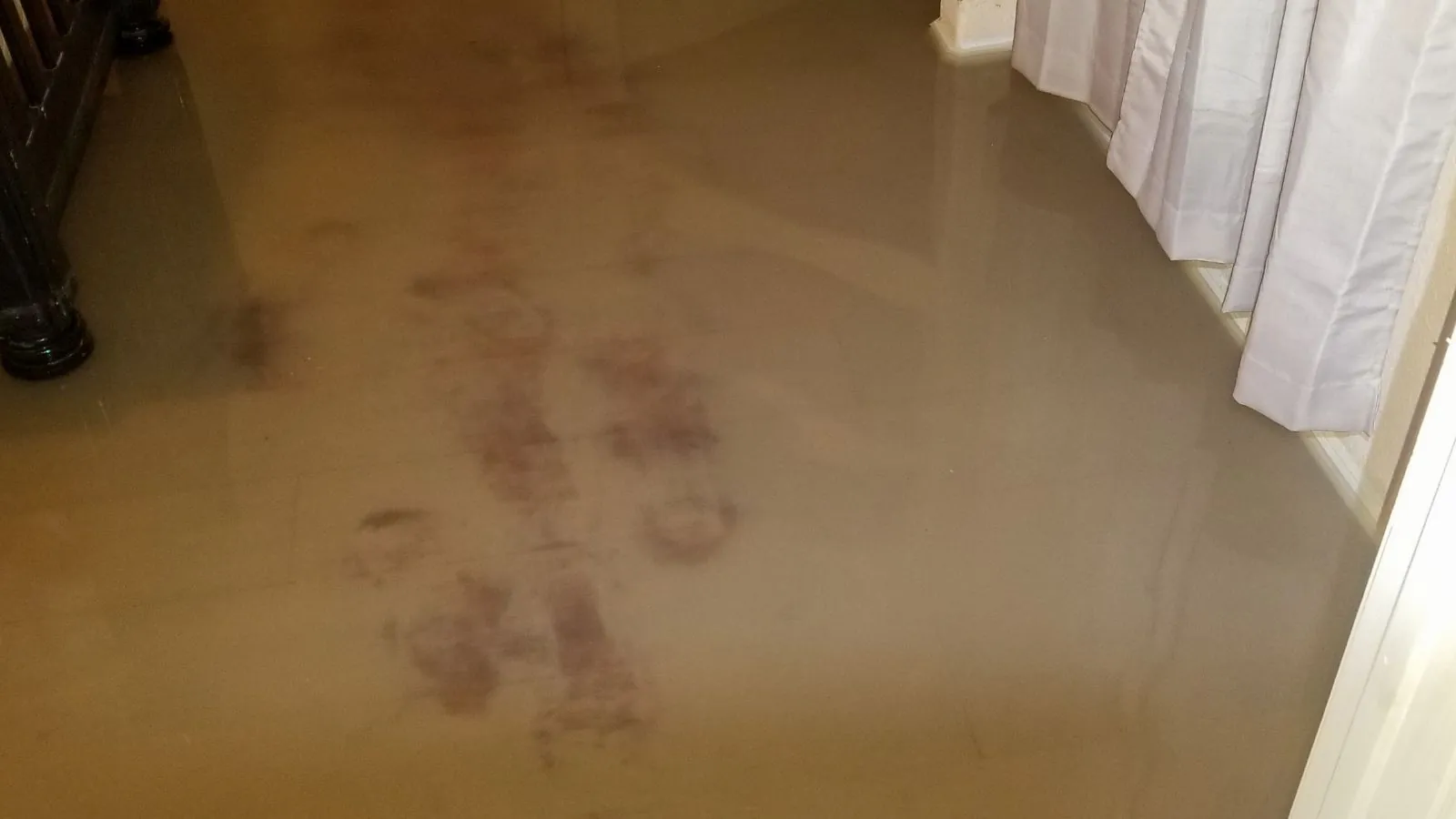
Dirty water coming up the floor drain or toilet?
If you see dark, foul-smelling water rising from a floor drain, a toilet, a tub or a basement sink, that is a sewage backup. The trade calls it Category 3 water, meaning grossly contaminated. It is not something to clean with a mop and a shop vacuum. Stop using every drain and toilet in the house, keep children and pets out, and call our 24/7 dispatch line.
Sewage backup cleanup in Taylor, MI is an emergency in the plainest sense. Contaminated water must be removed, the affected materials removed or disinfected, and the structure dried, all by a crew wearing protective equipment. Same-day response is offered when crews are available, and after-hours calls are routine, since backups tend to happen during heavy rain or heavy use.
Sewage backup: what to do first
- Stop running water in the house, including toilets, showers, laundry and dishwashers.
- Keep people and pets out of the affected area and away from the water.
- If water is near the electrical panel or outlets, stay out and call the utility or 911 before calling us.
- Do not use a household vacuum, and do not walk through the water and then through clean rooms.
- Photograph the damage and call a licensed plumber to clear the line.
The word backup matters. A plumber clears a blockage in the building sewer or the main line. We remove the water and clean up what it contaminated. Doing both quickly is the best way to limit the spread.
What Category 3 means for the cleanup
The ANSI/IICRC S500 standard sorts water by how contaminated it is. Category 1 is clean supply water, Category 2 has significant contamination, and Category 3 is grossly contaminated and can carry pathogens. Sewage is Category 3 from the start. Porous materials that it touched, such as carpet, pad, insulation and low drywall, are usually removed and discarded rather than dried.
| Material | Usual handling | Reason |
|---|---|---|
| Carpet and pad | Removed and discarded | Porous, cannot be reliably cleaned |
| Drywall and insulation | Cut out above the wet line | Absorbs and holds contamination |
| Hard flooring and concrete | Cleaned and disinfected | Non-porous or dense, can be treated |
| Framing | Cleaned, treated and dried | Dense wood can be saved |
| Soft contents | Evaluated, many are discarded | Cannot be disinfected without damage |
After removal, the crew cleans and applies an antimicrobial treatment, then dries with air movers and dehumidifiers, described on the structural drying page. Air scrubbing may be used to manage odors and airborne particles. Health questions about exposure belong with a physician.
Why a basement is where it usually shows up
Sewage tends to surface at the lowest drains, which is the basement floor drain, a laundry sink or a basement bathroom. Heavy rain can overload combined and sanitary systems and push water back up through connections that are lower than the street main. A backflow valve on the building sewer can help, and a plumber can tell you whether one is installed. The below-grade side of the cleanup is on the basement page.
During the 2014 storm that hit southeast Michigan, the National Weather Service reported that city sewer pumps were overwhelmed. The lesson for a Taylor homeowner is practical: ask whether your home has a backflow valve and a working sump pump, and test them before the wet season.
Michigan's 45-day notice and insurance questions
If a backup was caused by the public sewer system, Michigan law sets a written-notice deadline for claims against the responsible government agency. Under MCL 691.1419 the claimant must give written notice within 45 days after the date the damage was discovered, with the name, address and phone number, the property location, the discovery date and a short description of the claim.
The law also defines a sewage disposal system event as an overflow or backup of a sewage disposal system onto real property, and it excludes some blockages in private lines. This is general information, not legal advice. Ask the city or an attorney how it applies to you.
Separately, the state insurance regulator says a sewer backup or a failing sump pump may be covered under your homeowners policy, though water or sewer backup endorsements offer limited coverage and a standard policy does not cover flood. Call your insurer with your policy number, tell them you have water damage and ask what applies, and do not discard damaged items until they say you can.
Sewage cleanup cost factors
Price follows the amount of contaminated water, the area, the porous materials that must be removed, the disinfection and the drying and rebuild. Scope and price are explained before work starts. Crews also serve Garden City and Southgate for backups.
Questions people ask
Do you handle sewage backup emergencies at night or on weekends in Taylor?
Yes. The dispatch line is open around the clock. Sewage is a contamination risk that gets worse over time, so night and weekend calls are dispatched like any other, with same-day response when crews are available.
Why can I not clean up sewage myself?
The water is grossly contaminated and soaks into porous materials. Protective equipment, proper disposal and disinfection are needed, and a household vacuum can spread contamination.
How do I know my backup is sewage and not just a leak?
Sewage is dark, smells foul and comes up through drains and toilets. A supply leak is clean water from a pipe. If you are unsure, treat it as sewage and call.
How long do I have to give notice if the city sewer backed up?
Michigan law, MCL 691.1419, sets 45 days from the date the damage was discovered for written notice to the responsible government agency. Confirm how it applies to you with the city or an attorney.
Will my homeowners insurance cover a sewer backup?
The state regulator says it may be covered, though backup endorsements are limited. Call your insurer, say you have water damage and ask what coverage applies.