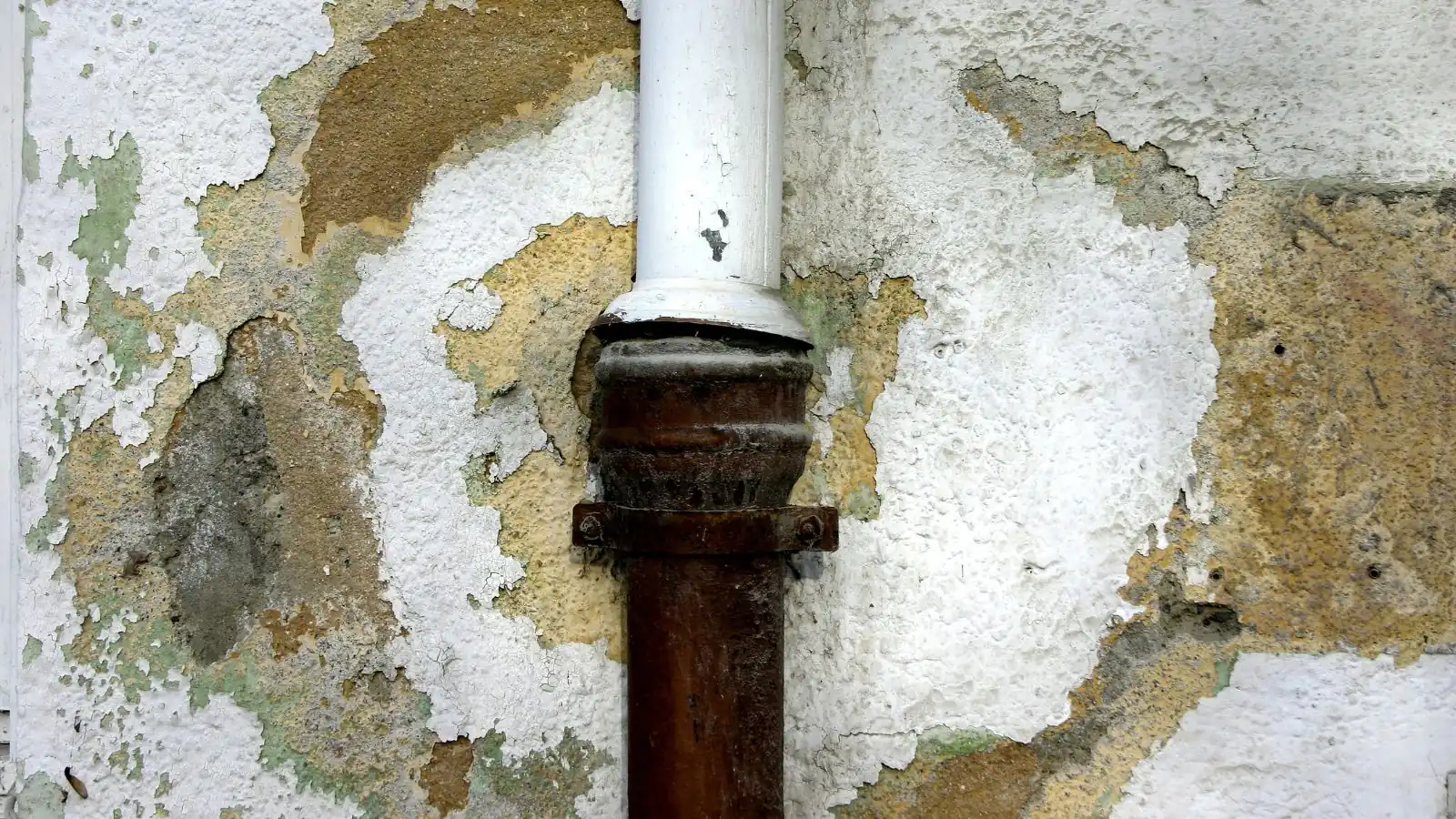
Bubbled paint is one of the most common signs of water damage that homeowners see, and one of the most commonly painted over. The bubble is the visible end of a problem that can be a plumbing leak, a roof leak, humidity or plain wear. The difference matters, because the right response to each is different.
Why paint bubbles
Paint is a thin film bonded to a surface. When moisture reaches the back of that film, it either pushes the film off as liquid water or as vapor that pushes through from a damp wall. Either way the bond breaks and the film lifts into a blister. Poor surface prep, painting over a dirty or glossy surface and heat on a south-facing wall can also cause blisters, so not every bubble is a leak.
| What you see | More likely cause | First check |
|---|---|---|
| Bubbles near a bathroom or tub | Steam or a plumbing seal | Fan use, caulk and moisture reading |
| Bubbles on an exterior wall after rain | Leak or wet insulation | Window, flashing and siding |
| Bubbles under a ceiling stain | Roof or upstairs leak | Attic and the room above |
| Bubbles low on a wall near the floor | Water wicking from the floor | Floor, baseboard and drains |
| Scattered bubbles on a dry wall | Poor adhesion or old paint | Moisture reading and surface test |
A simple way to tell old from active
Touch the area. A bubble that feels cool, soft or damp on the surface suggests active moisture. Press gently and look for softening in the drywall behind it. A stain with a hard edge and a rough dry texture may be old.
The reliable test is a moisture meter, which reads water content in the wall and in the drywall behind the paint. The crew at the Taylor dispatch line can do that reading, and the wall and drywall page explains what follows.
What not to do
- Do not scrape and repaint a bubble before you know why it formed.
- Do not use a stain-blocking primer as a substitute for drying the wall.
- Do not poke a large water-filled bubble over your head, since it can release a lot of water.
- Do not sand old paint in an older house without checking for lead first.
- Do not ignore a bubble that returns after repair.
If the bubble is on a ceiling, treat it as a leak until proven otherwise. The ceiling page explains how water travels across the back of the drywall and why the wet area is larger than the bubble.
Fixing the cause comes first
The order is the same every time. Find and stop the source, dry the wall, then repair the surface. If the wall is drywall, the EPA's guidance on water damage allows drying in place only when the board is not visibly swollen and its seams hold. Swollen or split board comes out. A crew uses moisture readings to make that call.
Once the wall reads dry, scrape loose paint, repair the surface, prime with a suitable primer and repaint. If the bubble was caused by high humidity, controlling the humidity is part of the fix, and a bathroom fan that vents outdoors is the standard approach.
Which rooms to check first
Bubbles on a bathroom ceiling often trace back to the shower or the fan duct. Bubbles on an outside wall often trace back to a roof edge, a window frame or a downspout. Bubbles low on a wall point toward the floor, an appliance line or a leak that wicks upward. Look at the room above and the wall behind first, then follow the pattern outward.
Write down the date you first saw the bubbles and photograph them with a coin beside them for scale. If they grow after rain, the source is outside. If they grow after a shower or after the dishwasher runs, the source is inside. That simple log helps a plumber, a roofer or an insurer see what you saw.
Taylor, MI: older paint and what to check first
The federal government banned lead-based paint for residential use in 1978, and the EPA advises that homes built before then may contain it. Peeling paint in an older Taylor home is a reason to be careful, not a reason to scrape it dry.
Ask a certified professional before sanding or scraping, particularly if children live in the house. The Census counts about 26,770 housing units in Taylor, and you can ask the county or the city building department how to find out when your house was built.
The same caution applies to plaster walls. A bubbled skim coat over old plaster is different from bubbled paint on drywall, and the repair method is different too. Sources used: EPA guidance on lead paint and on responding to water damage, and the Census Bureau housing figures for Taylor.
When to call
Call if the area is large, if it is growing, if the wall is soft or if a smell goes with it. A crew can read the moisture, find the source and set a plan. If the bubble turns out to be old, you will know that too. Crews from Taylor serve Garden City and Riverview as well.
Questions people ask
Does bubbled paint always mean water damage?
No. Poor adhesion, heat and steam can cause bubbles. A moisture reading separates those from a leak.
Can I just paint over it?
Not before you know the cause. Painting over moisture traps it and the bubbles return.
Is peeling paint in an older Taylor home a lead risk?
It can be. The EPA says homes built before 1978 may have lead-based paint. Ask a certified professional before sanding or scraping.
How can I tell a humidity bubble from a leak bubble?
Humidity bubbles tend to appear in steamy rooms and on exterior walls. Leak bubbles often follow a stain or a wet area and may be soft to the touch. A meter confirms it.