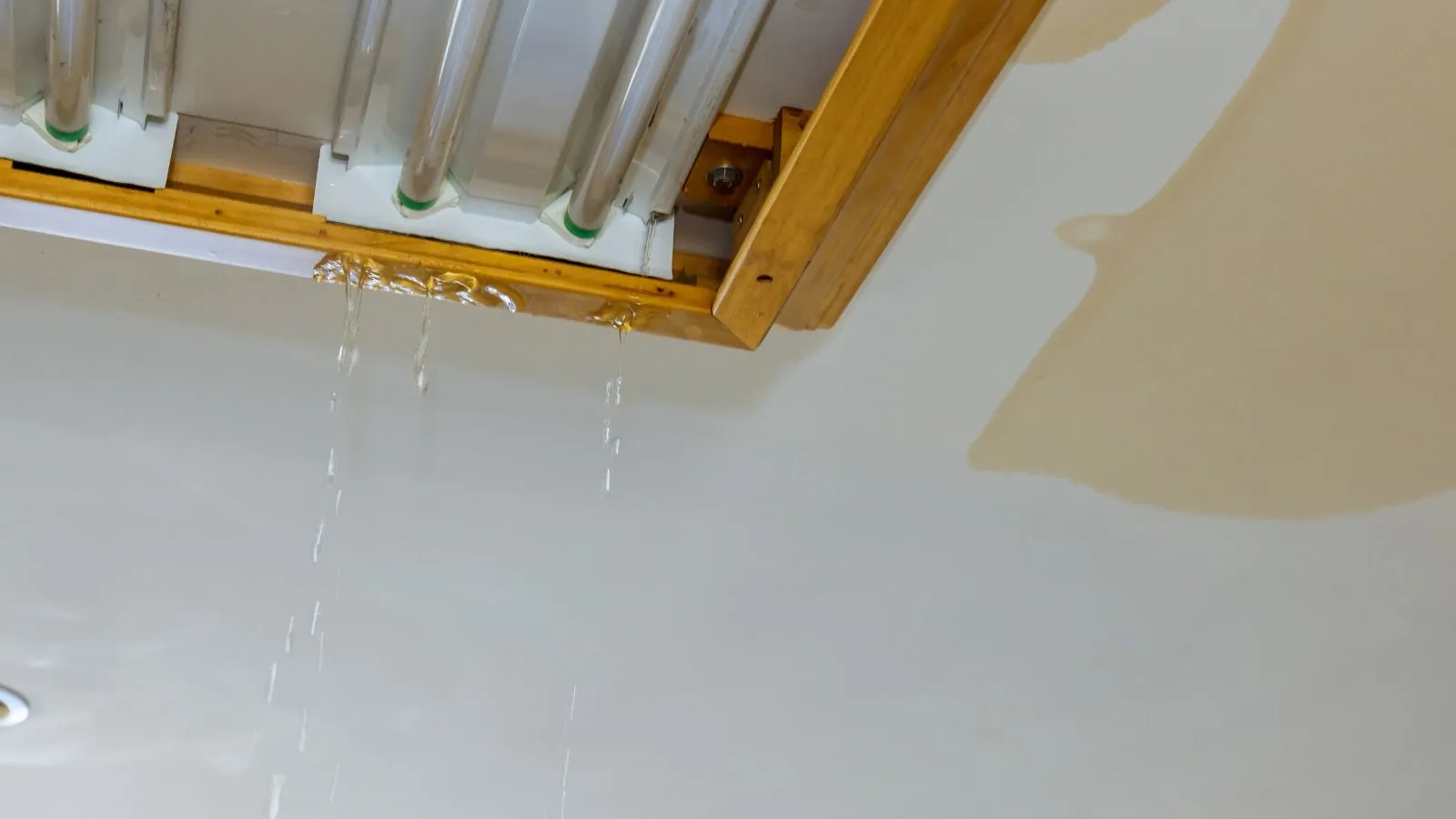
Finding a water stain raises two questions at once: is it still leaking, and how long has it been there? The answers matter for repairs, for insurance and for a home purchase. The eye can give clues, but a moisture reading and a look at the source are more reliable.
Clues you can see and feel
| Clue | Points to new or active | Points to old or dormant |
|---|---|---|
| Stain color | Yellow or light brown, with soft edges | Dark brown with a hard ring |
| Surface feel | Cool, damp or soft | Dry, stiff or crusty |
| Paint | Fresh blisters or sagging | Cracked and flaking, long-set marks |
| Smell | Wet or earthy | Faint or none |
| Edges | Spreading after rain or use | Stable over weeks |
| Surrounding materials | Swollen or soft | Hard with mineral deposits |
Rings are a sign of repeated wetting and drying. A stain with several rings suggests a leak that has come and gone, such as a roof that leaks only in heavy rain. A fresh stain can add a new ring each time it gets wet. The ceiling page explains how those patterns form above a ceiling.
Tools that tell you more
A moisture meter gives a number for wood and drywall. A thermal camera shows cool spots where water is evaporating. A hygrometer reads the humidity of the air.
Used together they separate a stain that is still wet from one that is old and dry. A single dry reading on a stain does not prove it is old, since a leak can be intermittent. Repeat readings after rain, or after using the fixture above, add confidence.
Crews can run readings and photograph the results, as described on the structural drying page. If the readings show water, the next step is to find and stop the source.
Why it matters
- Repairs: an active leak must be fixed before any surface repair.
- Insurance: sudden damage and gradual damage are often treated differently, and the age of the damage matters.
- Buying or selling a house: old stains disclosed honestly avoid disputes later.
- Mold risk: damp materials support mold, while dry old stains generally do not.
- Safety: a sagging ceiling stain can be an active hazard.
What an old stain can still tell you
A dry stain is still evidence that water got there once. Find out why, and check whether the cause was fixed. A roof leak that was patched may still fail. A bathroom seal that was recaulked may still leak around the tub. Ask whoever repaired it, and look at what is above and behind the stain.
Questions a buyer or tenant should ask
- Has there ever been a leak, a flood or a sewer backup here?
- Were repairs done by a licensed contractor, and are there receipts?
- Is there a sump pump, and has it ever failed?
- Has an insurance claim been filed for water in the last several years?
- Are there stains, odors or soft spots in the basement, closets or ceilings?
Sellers in Michigan complete a disclosure statement, and a home inspector looks at the visible condition of the house. Neither can replace your own eyes. Visit the property after a rain if you can, smell the lowest level and open closets and cabinets that might hide a stain.
What to do if you find old damage
Old damage that is dry is a repair question, not an emergency. Get it measured with a moisture meter, decide what to replace and plan the work. Damage that is wet today is different, and needs a fast response. If you are not sure which you have, call and describe it.
Photograph any stain you find with a date stamp and a tape measure in the frame. Come back a week later and take the same shot. A stain that has grown is active, and one that has not is likely old. That two-picture check costs nothing and settles an argument faster than a debate.
Taylor, MI: vacant homes and slow discoveries
The 2020 Census counted 26,770 housing units in Taylor, with 4.4 percent of them vacant. A vacant home with a slow leak is the setting where damage ages unnoticed, and a stain that has been there a long time can mean the house was empty. If you are buying a house in Taylor, ask for the history of any stain, and ask an inspector to read moisture.
The state insurance regulator's general advice for any water damage is to take photos or video and ask your insurer what applies. A record that shows what the stain looked like on the day you found it is the best evidence of when it started. Source used: U.S. Census Bureau housing counts for Taylor and Michigan DIFS guidance.
Where to go from here
If your stain turns out to be active, call and describe where it is. If it looks old, a reading will tell you that too. Crews serve Garden City and Inkster as well as Taylor.
Questions people ask
Does a brown stain mean the leak is old?
Not always. Brown rings form from repeated wetting and can come from a leak that is still active but intermittent. A reading confirms it.
How can I check if a stain is still wet?
Touch it for cool, damp or soft spots, and ask for a moisture meter reading. Repeat after rain.
If I am buying a home in Taylor, how do I check for old water damage?
Ask the seller for the history of any stain, and have an inspector read moisture and check the roof, plumbing and basement.
Does old water damage have to be repaired?
If the source is fixed and the area is dry, repair may be cosmetic. Ask a professional to confirm it is dry first.