The worst water damage stories start with a house nobody was in. A supply line lets go on a Friday and runs until Monday. A sump pump fails during a storm while the family is away. The checklist below is short, costs little and covers the failures that cause the most damage.
Before you leave
- Know where your main water shutoff is and that it turns. Valves that have not moved in years can stick.
- For a trip of more than a few days, consider shutting the main off, and open a faucet to drain the lines.
- Check washer hoses, dishwasher lines and the ice maker line for bulges, rust or drips.
- Look at the base of the water heater for rust and pooling.
- Test your sump pump by pouring water into the pit and watching it run.
- Leave the heat on in winter, set no lower than a level your plumber recommends.
Shutting the main is the single best move. A house with the water off cannot flood from a supply line, and the cost of doing it is a few minutes on each end. The tradeoff is that the water heater, any fire system and some sump or irrigation setups need attention, so ask a plumber about the right approach for your house.
| Risk | Prevention | Where it fails |
|---|---|---|
| Supply line burst | Shut the main off when away | Joints, fittings and old pipe |
| Washer hose | Replace rubber with braided steel | Connections at the valve |
| Water heater tank | Check age and base | Tank wall corrosion |
| Sump pump | Test and add a battery backup | Float switch or power outage |
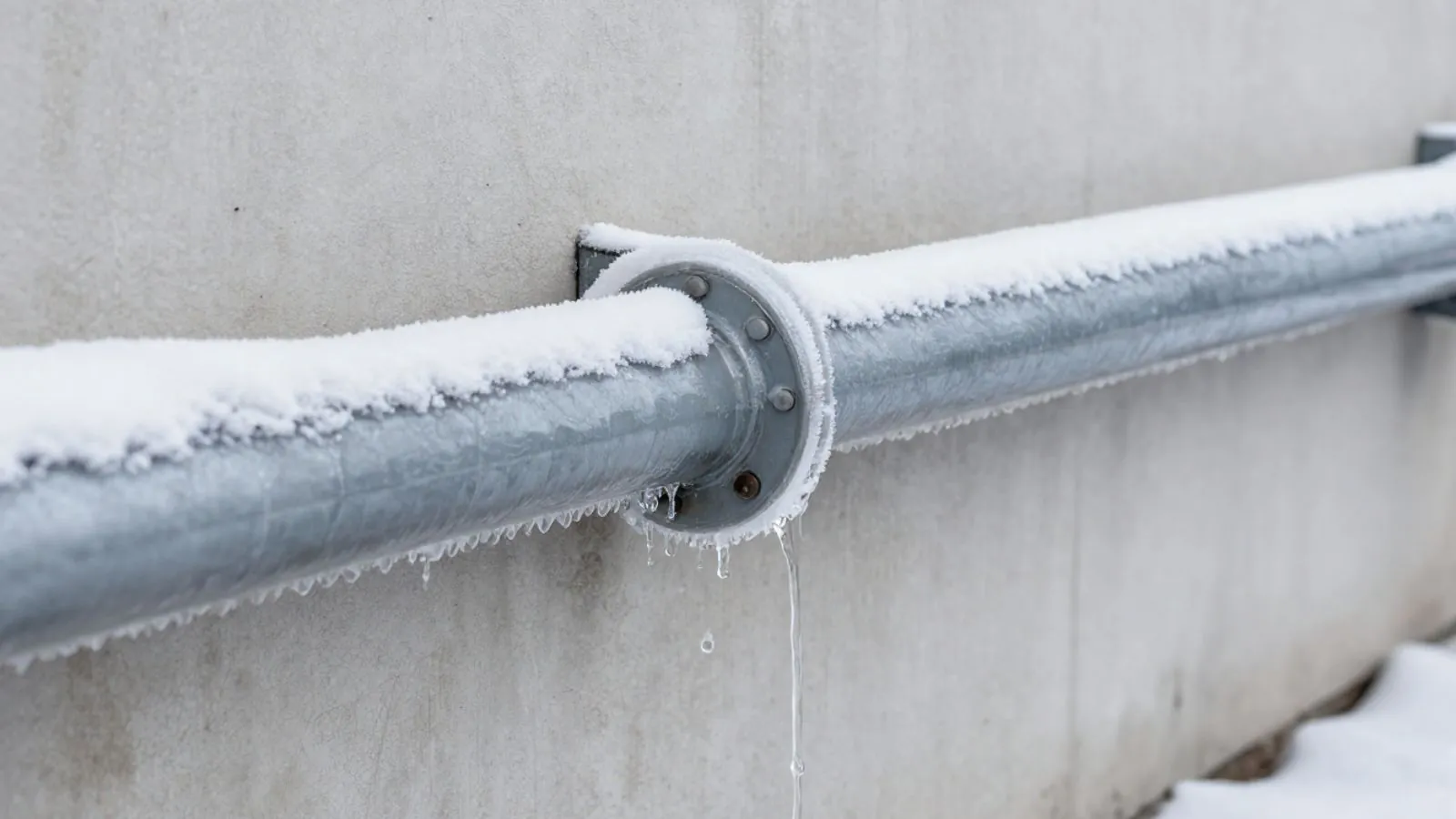
| Frozen pipe | Keep the heat on and insulate lines | Exterior walls and unheated rooms |
Winter specifics
Southeast Michigan winters bring below-freezing stretches and thaws, which is when lines in exterior walls, garages and crawl spaces crack. If you are away, keep the thermostat set to a temperature your plumber advises, open cabinet doors under sinks on exterior walls and ask someone to check the house. The frozen pipe page explains how freeze damage appears at the thaw.
Have someone check in
A neighbor or relative who looks in every day or two changes the odds. Give them the shutoff location, the plumber's number and ours. Ask them to check for water on floors, a running sound, a musty smell and the sump pit. A flooded house found on day two is far cheaper than one found on day seven.
- Leave your insurance information and a list of contacts where they can find it.
- Tell them about any pets or plants that need care.
- Ask them to check the garage and basement, not only the main floor.
- Give them permission to shut off the main if they find water.
- Keep a record of any visit, with photos if something is wrong.
Small upgrades that pay off
- A leak sensor beside the water heater, washer and sump pit that sends an alert to your phone.
- An automatic shutoff valve that closes the main when it senses a sudden flow.
- A battery backup for the sump pump so a power outage does not stop it.
- Gutter extensions that carry roof water well away from the foundation.
- Foam insulation sleeves on pipes in unheated spaces.
None of these cost much compared with a flooded floor. Sensors are the cheapest, and a plumber can fit a shutoff valve in a short visit. Ask your insurer whether any of these upgrades change your premium or your coverage terms.
Before you leave: a one minute walk
Walk the house once with a simple question in mind. If something failed now, where would the water go and who would see it? A bathroom over a finished room, a washer on an upper floor and a water heater in a closet are the places to look twice. Fix what is worn before you go, not after you return.
Write the plan down and tape it inside a cabinet door. Include the shutoff location, the plumber's number, our number and your insurer's claim line. Whoever walks in first will know what to do without having to reach you on a trip.
Taylor, MI: what the insurer expects while you are away
Michigan's insurance regulator advises photographing damage and keeping records after a loss. Many policies add conditions about heat and vacancy, so read yours for requirements on how long a house can be empty and what temperature to maintain. Ask your agent which conditions apply to your policy.
If you manage a rental or a second property in Taylor, the same preparations apply. The Census counts about 4.4 percent of Taylor housing units as vacant, which is the situation where a leak can run unnoticed. Sources used: Michigan DIFS guidance and U.S. Census Bureau counts for Taylor.
If you come home to water
Shut off the main, stay out of water near power and call. The water extraction page covers the first stage, and the crew can tell you what to do while they are on the way. Crews from Taylor also serve Southgate and Riverview.
Questions people ask
Is it safe to shut off the main water when I travel?
Usually, and it is the best prevention. Ask a plumber about the water heater and any systems that need water, and drain a faucet to relieve pressure.
Does my insurance require heat while I am away?
Many policies have conditions on heat and vacancy. Read yours or ask your agent.
What should a house sitter in Taylor check first?
Floors near the water heater, washer and sinks, the basement, the sump pit and any musty smell.
Should I replace rubber washer hoses?
Braided steel hoses tend to last longer. Check them every year either way.