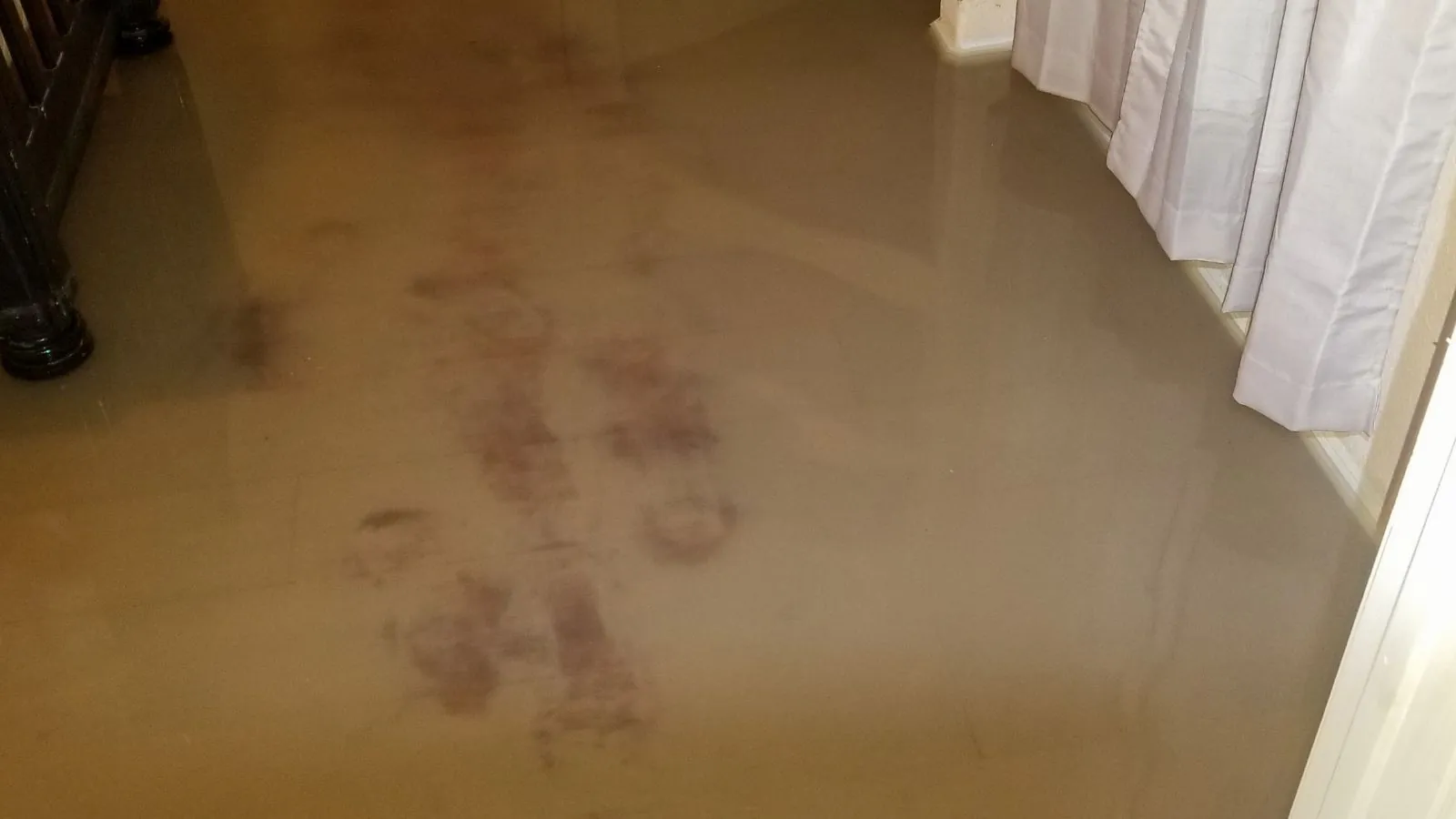
Restoration professionals use three categories to describe water damage. They come from the ANSI/IICRC S500 standard, which is the published industry standard for professional water damage restoration. The categories tell the crew how contaminated the water is, and that decides what has to be removed and how much protection the crew needs.
The three categories
| Category | Source examples | What it means |
|---|---|---|
| Category 1 | Broken supply line, tap overflow, rainwater from a clean source | Clean at the source, can degrade over time |
| Category 2 | Washing machine or dishwasher discharge, toilet overflow with urine but no feces | Significant contamination, can cause illness if ingested |
| Category 3 | Sewage, rising flood water, water from rivers and creeks | Grossly contaminated, can carry pathogens |
The categories are about the source and what the water picked up, not about how it looks. Clear water can be contaminated, and cloudy water can be harmless. When the source is uncertain, crews assume the more serious category.
Water changes category over time
Clean water does not stay clean. As it sits, it absorbs bacteria, dirt and materials from what it touches, and warm conditions speed this up. Category 1 water that is left in place can become Category 2 or 3.
That is one reason the clock matters, and the 24 to 48 hour window in EPA guidance for drying wet materials exists. The EPA page treats that window as guidance, and also says its steps apply to clean-water damage and that contaminated water needs experienced professionals and protective equipment.
What each category means for your belongings
- Category 1: carpet, drywall and furniture can often be dried if the response is fast.
- Category 2: porous materials such as carpet pad and insulation are usually removed. Carpet may be cleaned in some cases.
- Category 3: porous materials are removed and discarded. Hard surfaces are cleaned and disinfected.
- All categories: moisture readings decide what stays.
- Contents: soft items from Category 3 are generally discarded.
The flood damage page explains how outside flood water is handled as contaminated, and the sewage backup page covers the safety steps for Category 3 water. If your loss is clean supply water, the burst pipe page shows the usual plan.
Why insurers and crews care
The category affects the scope, the cost and the coverage conversation. A Category 3 loss involves protective gear, disposal and disinfection. It also is a signal to ask your insurer about sewer backup or flood coverage, since those are treated differently from a clean pipe break. Health questions about exposure are for a physician.
Questions to ask about the source
- Did the water come from a clean supply line, or from a drain, toilet or outside?
- How long has it been standing?
- Did it pass through insulation, soil or a floor drain?
- Does it smell, look cloudy or carry debris?
- Did anyone get sick or have a skin reaction after contact?
Answers to these questions help a crew place the water in a category. If you are unsure, assume the higher category until someone has looked. Treating clean water as dirty costs a little extra care, while treating dirty water as clean can make people sick.
Protect people first
Keep children, pets and anyone with a weak immune system out of any wet area where the source is unclear. Wash hands after contact, wear gloves and boots and do not eat or drink in the affected area. Do not turn on a furnace or fans if sewage water may be in the ducts or on the floor.
A good rule is to ask your crew to name the category in writing, along with the reason. If it changes during the job, the scope should change with it. That small bit of paper tells you and your insurer that the work matches the water, and not a template.
Do not rely on color or smell alone. Clear water can be contaminated, and cloudy water can sometimes be clean. A trained eye checks the source, the path and the time before deciding how the water should be handled and what must be thrown out.
Taylor, MI: a storm that turned clean rain into Category 3
On August 11, 2014, the National Weather Service reported 4 to 6 inches of rain over about four hours across Wayne, southern Oakland and Macomb counties. The agency's review noted that sewer pumps could not keep up. When storm water mixes with sewage or comes from a creek, rain that started clean becomes Category 3 by the time it is in a basement.
The practical lesson for Taylor homeowners is to treat basement water after a regional storm as contaminated until a professional says otherwise, and to stay out of it. Source used: National Weather Service review of the August 2014 storm.
Next step
If you are not sure about the category, ask. Crews serving Dearborn and Riverview as well as Taylor assess the source first and explain what they find.
Questions people ask
Can Category 1 water become Category 3?
Yes, if it sits and picks up contamination. Time and temperature matter, which is why response speed is important.
Is rainwater Category 1?
It can start clean, but once it passes through roofs, soil or drains it may be contaminated. Crews decide on site.
After a regional storm in Taylor, should I treat basement water as contaminated?
It is safest to assume so. Storm water can mix with sewage or creek water, and a professional should decide.
Does a clear color mean clean water?
No. Categories are based on the source and contamination, not appearance.