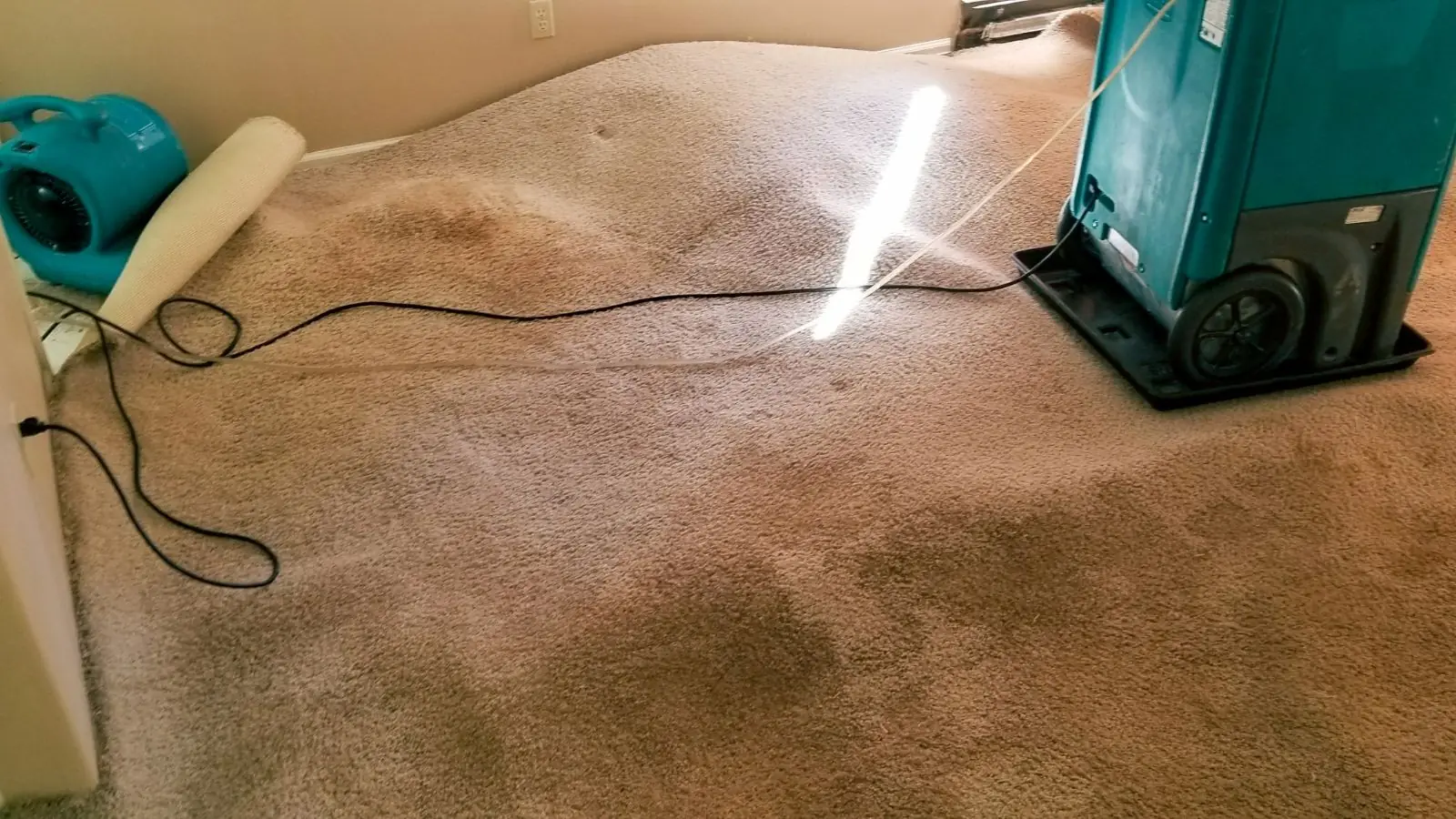
Not every wet floor needs a restoration crew. Plenty of spills are cleaned up in an afternoon with a mop, a wet vacuum and a few fans. The skill is knowing which ones are not. This guide draws the line using the EPA's published guidance on responding to water damage and the standard categories of water.
The green list: you can likely handle it
- A small spill of clean water on a hard floor, cleaned within hours.
- A wet area of carpet that has not soaked through to the pad, extracted at once.
- Damp towels, clothing and washable fabrics, dried quickly.
- Hard furniture and non-porous items wiped and dried.
- A leak you saw and stopped within minutes.
The EPA's guidance for clean-water damage says to extract water from carpet with a wet vacuum, lower humidity with a dehumidifier and speed drying with fans. It also says the subfloor beneath carpet must be cleaned and dried. That last point is where many do-it-yourself jobs go wrong.
The red list: call a professional
| Situation | Why not DIY |
|---|---|
| Sewage, flood or other contaminated water | Protective equipment, disposal and disinfection are needed |
| Water that has soaked a wall or subfloor | Moisture meters and equipment are needed to find and dry it |
| Water that has been wet for more than a day or two | Mold risk rises, and materials may be past saving |
| Large areas | Home equipment cannot move enough air or remove enough moisture |
| Any water near electrical panels | Safety first. Call the utility or 911 |
The EPA page says contaminated water, such as sewage, requires protective equipment and containment, and that professional help may be needed to dry a large area quickly and thoroughly. The sewage backup page and the flood damage page explain how those jobs are done.
Materials: what the EPA says
The EPA guidance gives a few specific rules. Wallboard can be dried in place if it shows no obvious swelling and its seams are intact. Otherwise it should be removed and replaced. Ceiling tiles that got wet should be discarded and replaced. Carpet can be extracted and dried, but the subfloor under it must also be cleaned and dried.
If you are unsure whether a wall is dry, the wall and drywall page explains how a moisture meter settles the question.
If you decide to DIY, do it right
- Stop the source and make the area safe.
- Extract standing water with a wet vacuum, not a household vacuum.
- Remove wet rugs, pads and items that cannot be dried.
- Run fans and a dehumidifier, and keep doors and windows closed.
- Check again after a day for damp spots, smells and a soft subfloor.
Equipment that helps and equipment that does not
A wet and dry vacuum, a few box fans and a household dehumidifier are reasonable tools for a small clean spill. Pointing fans at a wall does not dry the inside of the wall, and a dehumidifier sized for a bedroom cannot keep up with a soaked basement. Match the tool to the size of the job, and be honest about how big it is.
Check your progress with your hand and your nose. Cool, clammy surfaces are still wet. A musty smell that comes back after cleaning means moisture is still somewhere. A moisture meter, which many hardware stores sell, gives a number instead of a guess.
Know your stopping point
Decide in advance when you will call for help. If the floor is still damp after a day of fans, if a smell returns or if the wet area is bigger than you first thought, hand the job over. Waiting longer rarely helps, and the cost of a crew goes up as damage spreads.
If you decide to call a crew after starting yourself, tell them exactly what you did and when. They can build on your work instead of repeating it, and the readings they take will show what the fans and towels already handled.
Taylor, MI: renters, landlords and permits
About one-third of Taylor homes are renter-occupied, since the Census puts the owner-occupied rate at 66.7 percent for 2020 to 2024. If you rent, a DIY dry-out is not yours to decide. Tell the landlord or property manager first, since the owner controls the building, the plumbing and the insurance, and a rental can have its own rules on repairs.
For owners, ask the City of Taylor building department whether the repair you plan needs a permit. A simple dry-out does not, but replacing drywall or flooring can. Sources used: U.S. Census Bureau QuickFacts for Taylor city and EPA guidance on responding to water damage.
When in doubt
Call and describe what you see. A dispatcher will tell you if a few fans will do. Crews serving Riverview and Southgate do the same, and it costs nothing to ask.
Questions people ask
Can I dry wet drywall myself?
Only if the water was clean, the drywall is not swollen and its seams are intact, and you can confirm it is dry. Otherwise it needs removal and replacement.
Is a wet vacuum enough for wet carpet?
For a small clean spill, a wet vacuum plus fans can work. The pad and subfloor still have to dry.
If I rent a house in Taylor, can I dry water damage myself?
Tell the landlord first. The owner controls the building, and repairs may need approval.
When does a DIY dry-out become a mold risk?
When materials stay wet beyond roughly a day or two. EPA guidance uses a 24 to 48 hour window as a guideline.